
Friday, July 27, 2018

Poetry Friday: Summer Poem Swaps

I've never signed up for any of Tabatha's poem swaps before, mostly because I was very intimidated by what I saw of them on people's blogs.  In theory, all you have to do is to send a poem to the person whose address Tabatha sends you by the date she gives you, but in reality people go all out, and there are fabulous packages that fly back and forth.  But then I participated in a swap Margaret organized, just because I was so intrigued I couldn't help myself, and it was so much fun that I wanted to do another one. This summer I was going to be traveling, so I signed up for two of the swaps. At home we just get mail delivery once a week, and you'd think that would work fine and I'd just take the extra time to do something really special - instead, I don't do anything until the afternoon of the day the mail went in the morning, and then I realize I've missed it for another week and despair at what a loser I am. Being in the US I knew I'd have access to daily mail service and I'd have no excuses.

I wrote poems on postcards and sent them to the people I was assigned. As expected, it was fun and satisfying. It gave me a little extra boost to follow through on a vague poem idea and actually write something. I was happy.

Then I got home from my trip, and when I checked the mail I realized how right I had been to be intimidated. Oh my goodness! My two poem senders did indeed go all out. Take a look at what I got:

My first swap came from Linda Baie. Linda is such a generous Poetry Friday participant. Her comments always make it clear that she has thoroughly read and digested your post, and she always finds something positive to highlight. What a great teacher she must be! She's a wonderful poet, too, and I always enjoy reading her posts.

The package she sent contained a card in an envelope, a notebook, a book of poetry (can't wait to read it!), and the poem. Linda wrote me a golden shovel poem, and for the quotes to end the lines, she used my own words. And look at the bougainvillea photo! One thing every writer needs is readers, and this poetry swap from Linda makes me feel as though I have a reader in her.
Here's the poem. (Click on the photo to get a larger version that will be easier to read.) Isn't it amazing?  Thank you, Linda!
My second swap came from Tabatha Yeatts herself, the source of all this swapping. Tabatha's blog is called "The Opposite of Indifference," from Elie Wiesel's quote, "The opposite of love is not hate, it's indifference. The opposite of art is not ugliness, it's indifference." Tabatha is never indifferent, and many of the poems she posts - her own and those by other people - meet Emily Dickinson's definition of poetry as something that blows off the top of your head.

Like Linda, Tabatha wrote a poem that she knew would have special resonance for me.  Back in April I posted about madeleine poems, an idea I got from Nancie Atwell.  She got the name and the concept from Marcel Proust, who in one of his novels has a character eat a madeleine cookie and then be transported back into the past by the sensations and memories the cookie gives him.  The rest of the novel is a flashback caused by the taste of that madeleine.  I used George Bilgere's poem "A Madeleine" as my mentor text and then turned the whole writing process into a minilesson for my students.  You can read that post here.

So Tabatha's package contained her own madeleine poem, with a note and a gorgeous drawing by her daughter.  She wrote about picking black raspberries as a child and about how eating black raspberry jam brings back that experience.  She commented "It was easy to write and very difficult as poetry and memories are." That right there is the opposite of indifference, folks.

Here's the poem:


BLACK RASPBERRY
a madeleine for Ruth
by Tabatha Yeatts

For me,
it's a black
raspberry jam,
a shade that might
be at the end of the
rainbow, a jiggly finale,
with a scent as rare as the
slide down to a pot of gold,
rare no matter how many
candy chemists hunch
over their test tubes
trying to recreate it.

Hold it to my nose
and I'm a child who's
twisted a black raspberry
from the bush which I roll gently
in my palm before depositing it
into a pail where I can still smell 
it and its kin as I move farther down
the hilly path, fighting the urge to grab the brambles 
to steady myself as pebbles shift under my feet,
already aware that harvesting treasure
means hazarding tumbles and thorns.
Sigh.

Even though these poetry swaps do intimidate me (even more now than before!), I think I will participate in more of them because there is so much delight in the giving and the receiving. 

Here's this week's roundup.

Tabatha is sharing the poem I sent her today.
And Margaret is sharing the one I sent her, too!

Friday, July 20, 2018

Poetry Friday: Vacation

Vacation
by Rita Dove

I love the hour before takeoff,
that stretch of no time, no home
but the gray vinyl seats linked like
unfolding paper dolls.

Here's the rest of Rita Dove's poem.

A couple of days ago, I got a newsletter from the Academy of American Poets entitled, "'I'm just here in my traveler's clothes': Poems for Vacation Travels."  I hadn't read any of the poems yet, and when I clicked on this one this morning, I was startled by how appropriate it was for my day yesterday.  I flew home from just over three weeks traveling by myself in the United States.  Dove describes the nowhere yet everywhere feeling of airports so well in this poem.  

Getting home is always a maelstrom of emotions.  You'd think I'd be prepared for it, after all these years of back and forth, and I sort of am, but each time it hits me a little differently.  I had been up since four AM, and the atmosphere was more oven-like than I had remembered.  There were visible signs of the recent riots - frequent piles of the remains of burned tires on the road home, for example.  And my house always looks different to me when I'm returning from the States: I see everything through American eyes for a few moments and think in some surprise, "This is where I live?  Huh."  

I decided to leave the luggage completely alone.  I ate a sandwich, took a shower, and went straight to bed.  Everything would look better in the morning, I reasoned, and you know what?  It does.   

Heidi has today's roundup. 

Monday, July 16, 2018

Reading Update

Book #46 of 2018 was The One and Only Ivan, by Katherine Applegate.  This is a middle grade novel about Ivan, a gorilla who lives in a low-budget zoo in a shopping mall.  It's a lovely story and perfect for the reading slump in which I found myself at the time.

Book #47 was Clara and Mr. Tiffany, by Susan Vreeland.  Clara Driscoll worked making Louis Comfort Tiffany's designs in the late nineteenth century.  This is the story of her life, both her personal life and, even more interestingly, her professional life at a time when women did not receive respect or recognition at work.  Driscoll has a series of disappointing romantic relationships, but her work colleagues and creative friends are the most important connections in her life.  Fascinating.  Book #49 was Life Studies, also by Susan Vreeland, a book of short stories about art. 

Book #48 was Finding Home: Third Culture Kids in the World, by Rachel Jones.  I have a chapter in this book.  (I thought it was pretty interesting.)  But the rest of it was good too! 
Rachel has collected a series of guest posts about TCKs that appeared on her blog a few years ago and updated them with new material such as interviews with the authors and discussion questions.  The strength of a book like this is that it contains many different voices, and I enjoyed reading it.

Book #50 was a reread, Susan Howatch's book Absolute Truths.  This is one of those books I keep returning to.  I wrote about it here in 2009, 2010, and 2015.  It's about aging, the way stories come full circle, Romans 8:28, and more.

Book #51 was a recommendation from a friend, and I finished it after leaving her house and mailed it to her when I was done.  It was Fiela's Child, by Dalene Matthee, and it covers many of the topics I like to read about: identity, cultural clashes, what home really means. 

This post is linked to July's edition of Modern Mrs. Darcy's Quick Lit.

Friday, July 13, 2018

Poetry Friday: Calling Yourself a Poet

Recently I heard a poet on a podcast say that he never calls himself a poet. He said a poet is what he wants to be more than anything, but he prefers to let other people use the word because he feels it's pretentious to use it himself. Who was the poet? I have no idea; I thought I could find the quote again and didn't write it down. I did learn, while hunting for the podcast, that there are many poets who feel sheepish about using the word; here's an article that discusses the idea.

To me, it's all right to use the word "poet" about yourself if you write poetry. You aren't saying you're a great poet or even a good one; you're simply saying that you write poetry. I do, so I'm a poet.  Just as I call myself a reader because I read and a mother because I have children and a walker because I walk, I call myself a poet because I write poetry.

Even so, it's nice when others think of me as a poet, and I had an experience like that last week.  A friend commented that something that had just happened was symbolic and then she added, "Ruth will probably write a poem about it." (You'll have to take my word for it that she didn't say this in a mocking way but sounded as though she'd actually like to read such a piece.) In fact I had already made a note in my head that this event would be a great topic for a poem. Later I took the note from my head and wrote it down on my phone, and it's a good thing because otherwise it might have gone the way of the quote from...whoever that guy was who doesn't call himself a poet.
I had gone with my friends that day to their cabin in the woods. I've spent time there every summer except one since 2011, and every year I've written poems about it and shared many with them.

Earlier this summer I listened to this podcast, an interview with Michael Longley. It has lots of great stuff in it, but one of the parts I enjoyed most was when he talked about going to his cabin, a place called Carrigskeewaun, where he's been going regularly since 1970.

Krista Tippett said, "I want to ask you also about the mystery of place. And so, Carrigskeewaun is a cottage in County Mayo that you and your wife and family have gone back to it, I believe, for over many years. And you said something wonderful about the beauty of going back to the same place over and over again, that you notice more and more. It’s not that you exhaust a place; that you go more deeply into it."

Longley responded, "Yes, it’s inexhaustible. Mind you, it is very beautiful, and it’s very remote. And we’ve been going there since 1970. And we carried our children through the river and through the channel, and now they come back over — such a compliment to my wife and me that the children want to spend time with us. And they come back, and they now bring their children, our grandchildren on their shoulders through this really quite tough terrain. Every time I leave, I think, 'Well, there can be no more Carrigskeewaun poems. I’ve exhausted it.' But there always are poems, and the place is inexhaustible. I mean, you know this — the phrase, 'Travel broadens the mind.' We do quite a bit of traveling. But I think it also shallows the mind. But going back to the same place in a devoted way and in a curious way is a huge part of my life. And I’ll be going there even when they have to push me in a wheelchair."

(Listen to the rest here.)

I've so enjoyed traveling this summer, back to places I've been many times. I didn't realize how much I needed some things to look at that were separate from my usual life in Haiti.  I love Haiti deeply, and it is home, but I needed a break, and I'm thankful I've been able to have one. (Plus you may have seen in the news that things have been sort of difficult there this summer. I don't take my privilege for granted. There are plenty of people in Haiti who needed a break this summer way more than I did and who didn't get it, but instead got trouble and a worsening of their already challenging lives.) Going somewhere new would have been great too (and I did do some of that), but it was wonderful to go to some familiar places, places I already love, inexhaustible places.

Here's a poem I wrote about the cabin in 2011.  It's about fall, a time I haven't ever been there, so I was just going from photos and descriptions and imagination.

Morning at the Cabin, September 2011

Mug of coffee in hand
He sits back on his rocking chair
And watches this day arrive.
He has a front row seat.
Each tree, each blade of grass
And each invasive cattail
Takes its place for the performance to begin.
He holds his breath.
Has anyone read this play?
Can anyone say what will happen next?
Perhaps a deer will enter,
Perhaps a squirrel.
Some leaves are reddening.
All the elements are in place
For a drama.
All that's needed is time to stare
And that, he has.
He takes a sip of his coffee.

Ruth, from thereisnosuchthingasagodforsakentown.blogspot.com

I wouldn't put that poem on the same level as anything that Michael Longley has written, but is it a poem?  Yep.  And did I write it?  I sure did.  So do I call myself a poet?  You bet I do.

There will be more poems from the cabin; it's inexhaustible. I came away with a whole list of ideas. They will give me memories and poems for the whole year.

Bonus: I wrote this post about the cabin in 2012.

Here's today's roundup.

Friday, July 06, 2018

Poetry Friday: What is Home?

In 2012, I posted the Wislawa Szymborska poem "The Joy of Writing."  Here's the beginning of it:

THE JOY OF WRITING

Why does this written doe bound through these written woods?
For a drink of written water from a spring
whose surface will xerox her soft muzzle?
Why does she lift her head; does she hear something?
Perched on four slim legs borrowed from the truth,
she pricks up her ears beneath my fingertips.
Silence — this word also rustles across the page
and parts the boughs
that have sprouted from the word “woods.”

(Read the rest here.)

Last month in the Poem-a-Day email from Poets.org, I read Maggie Smith's poem "Written Deer," responding to Szymborska's poem.   Click through to read the whole thing, but I'm mostly fixating on the last stanza, which ends like this:

What is home but a passage
I'm writing and underlining every time I read it.

I'm away from home right now, and that always makes me think more about home and what it is and isn't.  I like the idea that it's a passage I'm writing and underlining.  Maybe I'll write my own poem about that.  

In the meantime, check out the roundup here to see what other people have posted this week for Poetry Friday.  

Thursday, July 05, 2018

Spiritual Journey First Thursday: Halfway Through

Doraine is hosting Spiritual Journey First Thursday this month, and she's asked us to reflect on the year so far, since we're now officially halfway through 2018. When I first saw the topic, I thought what a good one it was, but the more I think about it, the more I feel sad.

My OLW for 2018 is ENOUGH.  In 2 Corinthians 12:9, Paul wrote: "But he said to me, 'My grace is sufficient for you, for my power is made perfect in weakness.' Therefore I will boast all the more gladly about my weaknesses, so that Christ’s power may rest on me." In that spirit, let me boast that I'm very weak in the ENOUGH department at this moment, as I get ready to head southwards after two weeks with my daughter in the midwest. I am so blessed in my life, and I have so many reasons for gratitude, but the goodbyes kill me every time. When I'm here, I miss my husband and son at home, and when I'm there, I miss my daughter here, and there are always friends and family to miss wherever I am.  Several of my closest friends in Haiti have moved away during the past couple of years. The news doesn't help, as I watch families separated and think about tiny children not knowing where their parents are, not knowing when they will see them again. The world is a sad place sometimes. It seems that perhaps a better choice for an OLW this year would have been GOODBYE. 

Please don't tell me goodbyes bring hellos. I know that, but right now I'm not feeling it.  


I love the picture Sara Groves paints in this song, a place and time when everyone we love is together, where there are no goodbyes and no separations. In this life we get brief tastes of that, brief moments.  I'm trying to focus on every moment, every blessing, every piece of goodness in my life, to turn toward the hellos and find ways to make them be ENOUGH in this second half of 2018. But what I mostly need, and what I know will be ENOUGH for me, is God's grace, which has always been there, and will keep being there.  His power is made perfect in my weakness.
You can see what other people have written on this topic here

Friday, June 29, 2018

Poetry Friday: Bayou Song Blog Tour

Today I am honored to host the third stop on Margaret Simon's Blog Tour for her charming new book Bayou Song: Creative Explorations of the South Lousiana Landscape (you can see a list of the other stops on the Tour at the end of this post).  When I read the book, I had just listened to this podcast from On Being, so those two pieces of art, both about finding joy in nature, are intertwined in my thoughts.

Let me back up a little bit and tell you about one of the ideas in the podcast, and how it illuminated Margaret's book for me and made me appreciate even more the beautiful way it mixes nature, reading, and writing.

In the podcast, Krista Tippett interviews Michael McCarthy, the British author of The Moth Snowstorm: Nature and Joy.  She starts out by sharing this quote from McCarthy: "The sudden passionate happiness which the natural world can occasionally trigger in us may well be the most serious business of all." He has a lot to say about crisis in the natural world, the way ecosystems are collapsing, habitats are disappearing, and there are just fewer creatures out there.  It would be easy to despair, and sometimes when we teach kids about nature we can do it in a negative way, focusing on words like "endangered."

Tippett says to McCarthy: "while statistics of decline and demise and the destruction of the natural world don’t mobilize action — they, in fact, dampen us — and so joy can have a quality of seriousness, and yet, be animating."

And he replies: "If we could mobilize this sort of love we have for the natural world — and the essence of it is the fact that the natural world is a part of us, and that if we lose it, we cannot be fully who we are. And if we were to realize that, which is hard, and if we were to realize it on a large scale, which is even harder, that might offer a defense of nature at the time when we are trashing it remorselessly."

As I was listening to this interview, I was thinking about how we can do this with children; how can we encourage them to love the natural world so much that they want to protect it, not out of fear and despair, but because it's so important to them?

When I read Margaret's book, I thought: this is how. 

In Bayou Song, Margaret doesn't write about the whole world. She writes about her tiny part of it, a part that she loves, a part on a bayou in Southern Louisiana. Using a variety of forms, she writes loving tributes to plants and animals that live where she does. Beautiful photography and drawings help the reader see Margaret's world even more clearly. And then each poem is accompanied by a prompt, so that we, following Margaret's lead, can look around closely at the nature in our world.  What lives where we do?  Let's pay attention, and let's write about it!
Here's an example of Margaret's writing, "Ode to a Toad."

Her note introduces the reader to Pablo Neruda and his odes to ordinary things. She suggests writing an ode, too. So I did. I looked around my part of our beautiful planet, a street in the suburbs of Port-au-Prince, Haiti.  Look what's in bloom right now!
Taking Margaret's poem as my mentor text, I wrote my own ode.  (The "conspicuous claws" reference comes from a little research I did, in which I learned that the word "delonix" comes from Latin for "conspicuous claws," a description of the petals of this tree.)


Ode to a Flamboyant Tree (Delonix regia, Royal poinciana)

You blare
your bright red jazz
through June’s steamy days.
You are all flourish
and ostentation.
Leaving subtlety
to others,
you make the most
of your conspicuous claws.
You accessorize your red
with glowing flashes
of yellow and white. 
Royal tree,
I curtsy to you as I walk by.
I watch you fan yourself
with your green fringes
and display your blossoms
to advantage.
Flamboyant you are
as you dance
with your castanets,
far into the night.

by Ruth, from thereisnosuchthingasagodforsakentown.blogspot.com


How can we encourage kids to care for nature? We can encourage them to love it, and we can do that by teaching them to pay attention to it, not as a grand abstraction but in the specific plants and animals around them. Margaret's poems and prompts will help me do that with my students next year.

Order your own copy of Margaret's book here.

Bayou Song Blog Tour

To read more exciting posts about Margaret Simon’s debut children’s poetry book, Bayou Song, follow this blog tour.

Friday, June 22: Michelle Kogan
Tuesday, June 26: Catherine Flynn at Reading to the Core
Friday, July 6: Kimberly Hutmacher at Kimberly Hutmacher Writes
Friday, July 13: Linda Mitchell at A Word Edgewise
Tuesday, July 17: Laura Shovan
Tuesday, July 24 Amanda Potts at Persistence and Pedagogy
Friday, July 27: Carol Varsalona at Beyond LiteracyLink
Monday, July 30 Linda Baie at Teacher Dance
Friday, Aug. 3 Dani Burtsfield at Doing the Work that Matters

Carol has today's roundup.

Friday, June 22, 2018

Poetry Friday - Some Photos I Took at the Library

I've been opening our school library once a week for the summer, since we don't have public libraries where we live, and I don't like thinking of the kids being bookless.  Here are some pictures I took on Tuesday, some of the library in general and some of a poetry book I found and enjoyed.

In the middle of all the mess in the news this week, it felt good to read some beautiful words.

Michelle has today's roundup.

Monday, June 18, 2018

Reading Update

I've been in a bit of a reading slump lately, but here are the books I've finished since my last reading update.

Book #40 of the year was Imperfect: Poems About Mistakes, reviewed here
Book #41 was Debunking the Myths of Forgive-and-Forget, by Kay Bruner.  Bruner, a therapist, does a wonderful job of exploring the process of forgiveness, and what forgiveness means - and doesn't mean.

Book #42 was Ascent, by Roland Smith.  This is the third book in the Peak series, and in this one, Peak visits Myanmar. 

Book #43 was Charles Frazier's new novel, Varina.  This is the story of Jefferson Davis' wife Varina, and her life before, during, and after the Civil War.  I am a big Charles Frazier fan, and I've been eagerly anticipating this book since I first learned it was going to be coming out.  Frazier doesn't disappoint in his complex, sympathetic portrayal.

Book #44 was A Sky the Color of Chaos, by M. J. Fièvre, an atmospheric story of a childhood and adolescence in Haiti.

Book #45 was The Warm Place, by Nancy Farmer, a middle grade title about a giraffe, a chameleon, a rat, and assorted other characters in search of home. 

Thursday, June 14, 2018

Poetry Friday: Self-Portraits

Rembrandt's Late Self-Portraits
by Elizabeth Jennings

You are confronted with yourself. Each year
The pouches fill, the skin is uglier.
You give it all unflinchingly. You stare
Into yourself, beyond. Your brush's care
Runs with self-knowledge. Here
Is a humility at one with craft.
There is no arrogance. Pride is apart
From this self-scrutiny. You make light drift
The way you want. Your face is bruised and hurt
But there is still love left.
Love of the art and others. To the last
Experiment went on. You stared beyond
Your age, the times. You also plucked the past
And tempered it. Self-portraits understand,
And old age can divest,
With truthful changes, us of fear of death.
Look, a new anguish. There, the bloated nose,
The sadness and the joy. To paint's to breathe,
And all the darknesses are dared. You chose
What each must reckon with.

Photo Source: nga.gov


At this link you can watch a video about the painting. (I embedded it here but couldn't figure out how to keep it from playing automatically, which is annoying.) The video talks about how Rembrandt was his own favorite model.  I'm not sure that I'd use "favorite" to talk about how I feel about myself as a model, but we're definitely stuck with ourselves as models for whatever art it is we're trying to make.  That face, those emotions, that history, those same issues that keep re-emerging year after year.  "You are confronted with yourself," as Elizabeth Jennings puts it.  "Your face is bruised and hurt/ But there is still love left."

Rembrandt was 53 when he painted this self-portrait.  The other day I saw on Facebook that someone had posted an article about a survey in which people were asked at what age old folks should stop wearing jeans.  The result: age 53.  So what I want to know now is: if I just have a few years left of wearing jeans, is it OK if I get myself a hat like Rembrandt's?  Will the Zeitgeist, which apparently now chooses my wardrobe, permit me that indulgence? If I could paint, I would then paint a self-portrait with a little worried line between my eyes, similar to his.  Since I can't paint, I can at least snap a selfie, trying to capture "the sadness and the joy." 

Karen Edmisten has the roundup today.

Friday, June 08, 2018

Poetry Friday: Goodbye

The beginning of the summer is the season of goodbyes. I should say it is one of the seasons of goodbyes, because there are goodbyes all year round, but at this time of year multiple people leave at once. (Here's an amazing blog post explaining the constant transitions of the expat world.)

Today I'm sharing three goodbye poems I've written in the past year. The first one is about my childhood, the second about my frustration with people saying "I'll always be with you," "I'll be in your heart" and other such phrases when they are leaving, and the third about a friend in my writing group who is leaving.

Pyjamas

When I was a child
I would always carefully fold my pyjamas
in the morning when I got dressed
and place them under my pillow.

When we stayed in a hotel
or a motel
or someone else’s home
I would do the same.

In this way I left pyjamas
in many US states
and a few countries,
under pillows far and wide.

I like to think it was because
I felt at home everywhere.
When I lay my head on a pillow
and slept and dreamed there
that place became part of my life.
Or perhaps I was storing pyjamas
in case I ever came back.

But those places weren’t part of my life,
any more than all those people
we met on our travels,
the ones who promised to write to me,
and never did.
And I almost never did come back.
At least until I had outgrown the pyjamas.

Now that I am grown
I still always put my pyjamas under my pillow
but when I am not at home,
I have learned to check there when I’m packing.

I have a better idea now of where I belong.

Ruth, thereisnosuchthingasagodforsakentown.blogspot.com


Goodbye

He told me he’d always be there.

As
he backed out of the driveway
he was still promising he’d never leave me. 

His face got smaller and smaller
as
he called from the car window,
“I’m still with you!  I’ll always be with you!”

The taillights disappeared down the street
as
he wasn’t with me any more.

Ruth, thereisnosuchthingasagodforsakentown.blogspot.com


Goodbye (after M.S. Merwin)

with nobody listening we are saying thank you
thank you we are saying and waving
dark though it is
 M.S. Merwin, "Thanks"


I am always waving goodbye,
goodbye to the moment,
goodbye to the day,
goodbye to my family,
goodbye to many friends,
and now
(inevitably)
goodbye to you.

There you go, walking away
to parts unknown,
(Florida? 
Georgia? 
Washington DC? 
Belgium?)
and I am still here
waving goodbye

Making a speech,
I am saying goodbye.

Carrying home a bag of books
from your apartment
and some Extra Virgin Olive Oil,
I am saying goodbye.

Taking the art down from your walls
so you can pack it,
I am saying goodbye.

Writing these lines,
I am saying goodbye.

Talking and laughing,
I am saying goodbye.

Meeting you,
I was already saying goodbye.

Goodbye,
goodbye my friend,
I call behind you,
thank you we are saying and waving,
dark though it is

Ruth, thereisnosuchthingasagodforsakentown.blogspot.com

Here's today's roundup.

Thursday, June 07, 2018

Spiritual Journey First Thursday: Summer

This month our host, Margaret, has invited us to reflect on summer for our Spiritual Journey First Thursday. (In January the topic was our OLW, in February the moon, in March music, in April poetry, and in May special days.
Living in the tropics as I do, my life is not much defined by seasons.  The variety is limited here.  All year long the weather is hot, the skies are blue, the blooms are bright.  In February the temperature is lower than in July, but only by a few degrees.  (Take a look at this link to see how little the temperature changes.)

The exception is summer, not for the population at large but for me as a teacher in an American-style school.  On Monday I finished shutting down my classroom and covering my shelves with plastic; I go back to work the first week of August.  Summer is a fallow time, a time of quiet and rest, a time for reading books I couldn't get to all year, making sun tea, staying barefoot and in my pyjamas.  Summer is, many years, a time for travel and seeing different views.  It's a time for reminding myself that not everyone in the world is focused on the same issues that preoccupy my days, a time for remembering that there's a world out there at all. 

Summer for me is an extended Sabbath, and I do recognize how blessed I am that it is so.  Most people do not get the privilege of ten weeks of rest and change right at the warmest time of the year.

James 1:17: "Every good and perfect gift is from above, coming down from the Father of the heavenly lights, who does not change like shifting shadows."

Sabbath is about pure gift; it's about receiving from God when you don't work, about being taken care of by God when you don't hustle.  My OLW this year is ENOUGH, and summer is all about enough.  It's about enjoying it while it lasts, every sun-soaked moment.  It's about recognizing, with Shakespeare, that "summer's lease hath all too short a date." (You can read that sonnet here.)

Last summer I played a lot with the metaphor of sun tea (Here's a post I wrote last summer about sun tea, on a day when we were planning a pizza party in the evening two couples; the post mentions that one of the couples was about to have their first child, and sure enough, she went into labor that day and we had to postpone the pizza party!).  At the end of the summer I wrote the following poem.  I'm not fully happy with it, really; I think maybe this idea wants to be an essay instead, and that it needs more work.  But I love the thought of these little dried pieces of tea coming to me from all over the globe, and the sun making the tea for me without me having to light the stove.  I love the word "alchemy" and the stories behind each of my glasses of iced tea.  I love how even though the poem doesn't use the word "enough" or the word "Sabbath," it's full of both.  And how even though it doesn't use the word "God," I know the source of those good and perfect gifts.

Sun Tea, Summer 2017

Fill the jar with clean water.
Put in the tea:
sometimes loose, to be strained later,
sometimes in a tea ball infuser,
sometimes a handful of tea bags.
Screw on the lid.

Go outside, barefoot or in flip flops,
and place the jar in its spot:
next to the crown of thorns in the pot,
out of reach of the dogs,
directly in the sun.

The sun is the key,
working its alchemy as the day advances,
as the tea and the fruit and the flowers
spread their essences into the water
and the mixture steeps,
silently blending,
darkening.

This summer’s offerings:
blueberry hibiscus
passion green
chamomile medley
berry black
Kyoto cherry rose
honey-vanilla chamomile
hot cinnamon sunset
hibiscus
country peach passion
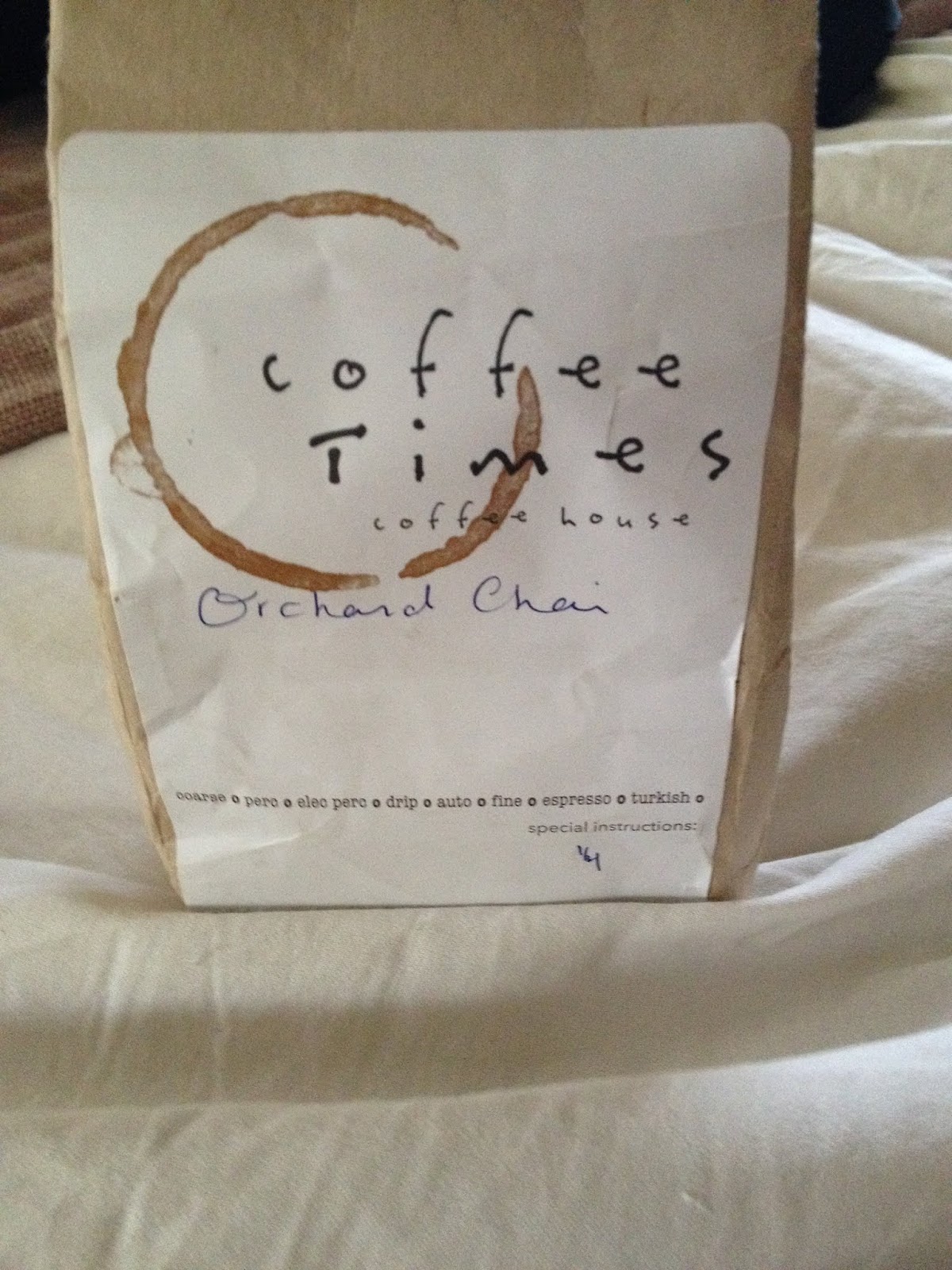
orchard chai.

Each one has a story:
the end of a birthday present from last year,
a gift from my husband’s student
(I made tea from this one day after day
until the whole box was gone),
my daughter’s choice,
a purchase during an outing with an old friend’s new wife.

Each one is filled with ingredients
carefully gathered from trees and bushes and fields,
dried in the sun in other latitudes,
combined and packed in boxes and bags.

Bring in the jar
when the mixture is dark enough:
golden brown, red, peachy.
Take out the leaves or the bags,
sweeten the tea to taste,
and put the jar in the fridge
to chill for a couple of hours.

Serve over ice.

Ruth, from thereisnosuchthingasagodforsakentown.blogspot.com


You can read other people's reflections on this topic at Margaret's blog here.

Saturday, June 02, 2018

What I Learned in May

I don't think people learn much in May, at least not the school kind of learning. May is mostly disrupted schedules, noisy celebrations, chaos of many varieties. There were projects and exams, yes, but mostly, if you haven't learned it by now, you probably won't, not this year.

At the beginning of the month, I wrote down on my "What I Learned" list that I had reread the shipwreck book.

Jonathan Martin writes, "The bad news is that this shipwreck feels like death, because you really may be dying. The bad news is that old and familiar things you loved and that made you what you were are slowly passing away. The good news is you're being born, and the drowning makes possible the moment when all things become new - most of all, you.

Maybe a preacher on the radio told you once you could be born again if you just repeated a prayer after him. How I wish this were so. But the Scripture where a man named Nicodemus comes under cloak of night for a secret rendezvous with Jesus, and the prophet speaks to him about being born again, is also the place where Jesus talks about that Spirit, the one who broods over the sea, bringing life and beauty out of chaos.  The Spirit is like the wind, he says; you don't know where it comes from - and you don't know where it is going. And the people who say yes to this undomesticated Spirit, the people who say yes to the wind - yes to the sea - will be like this Spirit, not knowing where they came from, or where they are going. They are people who learn to trust the wind instead of fighting it, people who learn to navigate the chaos rather than eliminate it. They will be people born of Spirit, people born of the violence of the storm and the wildness of the wind. And because the Spirit who enters them is the Spirit of life itself, they will live forever.

You can't descend back into the waters of your mother's womb, the prophet tells Nicodemus. But you can be born again; you can be made new. It's just that when you do, it won't be because you made 'a decision for Jesus,' because you prayed the magic prayer. If you wish to become someone and something else entirely than the you that was before the storm came...you will have to peer into the sea that threatens to swallow you whole, dive into the mouth of it - and trust. You will have to let God happen to you, which requires letting life happen to you, all the way down. You cannot continue to flail your arms, beat against the sea, and damn the waves. You have to let yourself go all the way under - into the depths of God, into the depths of your own soul, into the depths, of life itself."

So yeah, that.  I keep learning that.

Even though nobody was learning much, I did get observed teaching by an administrator on May 15th. Why didn't he come see me teaching when I was dispensing wisdom back in October? But no, he wanted to see my weary May attempts.

Today we have Graduation and say goodbye to our Seniors, and then the late May early June goodbyes accelerate as colleagues who are leaving pack up and actually leave, finishing the agonizing process they started months ago. This year especially, I am losing some people who have become extremely important to me.

So I keep learning that, too.

Here's what I learned in JanuaryFebruaryMarchApril.  

Friday, June 01, 2018

Poetry Friday: Paul Simon

This was my last week of school with kids, though I may end up back there quite a bit this summer, getting ready for next year and doing summer library. While I've been grading exams and working in my room, I've been listening to lots of Paul Simon, who wrote some of the best songs for cleanup.  He's my choice these days, too, because he's on his farewell tour. I'd always hoped to hear him live sometime, and it's looking now as though it's not going to happen.  The show sounds fabulous, but it's too far away from me, so instead I've been listening to the albums I own, and even finding some songs on YouTube that I hadn't heard before.


In this video, as part of an interview with Wynton Marsalis, Paul Simon says this about writing. Marsalis asks him how he could have written "The Sound of Silence" as such a young man.  He admits that after he wrote it he thought it was better than what he usually did, and then adds:

“I had no concept at all about what is magical about inspiration, you know, and I don’t think about inspiration at all, I don’t believe that you need inspiration, I don’t say I’m going to wait around until some inspiration comes, no, if I’m going to write I have to go to my writing space, and, you know, start to write.”

Later he says that when he was younger, if he liked a song, it was generally a hit.  That's not the case any more, but he's past that point now (and I'm sure it doesn't hurt that there's no longer any pressure to make money).  Instead, he says, “I’m only concentrating on, what can I make, and how can I do this without lying.”

How to choose what Paul Simon songs to love best?  I just can't.  I love it that he has an index on his website of all the songs and the full lyrics (here).  I do appreciate the music, but the lyrics are always the most important aspect for me, and I can't fully enjoy a song until I've figured out what it's saying.

I've posted Questions for the Angels before, and Something So Right, and Insomniac's Lullaby, and others, but the Graceland album is just the best there is, anywhere, ever, and this is one of the best songs on that album:


And here's a bonus:


Now that school is over, I am going to follow Paul Simon's advice and "go to my writing space, and you know, start to write."

This week's roundup is here.

Thursday, May 24, 2018

Poetry Friday: More than Meets the Eye

This week I'm participating in a photo exchange called "More than Meets the Eye," organized by Margaret. She asked people to sign up, and then she matched us up with a partner who lived somewhere else. The instructions were to send a photo from where you lived to the other person, and then to write a poem about the photo you received.

I got a photo from Heidi. As soon as I saw it, I thought of Karla Kuskin's poem "Write About a Radish," which begins "Write about a radish./ Too many people write about the moon."

Here's the photo and my poem:
Radishes

When Margaret told us to send a photo of where we live,
I sent a view of a far-off beach,
and you could see the sky and the ocean and palm trees
stretched out for miles and miles and
this is where I live,
at least after you drive for two hours
and stand on a mountain
and think about being at the end of the road
and how beautiful it’s going to be when you get there

When Heidi sent a photo of where she lives,
it was a close-up of six radishes
freshly pulled from the ground,
and they were cherry-red,
so red that from now on the expression must be radish-red,
and their leaves were fresh and green
and the soil was black and
this is where she lives,
when you get down on your hands and knees
and think about being here where you are
and how beautiful it is right this moment

So I Googled radishes and read about
how they were the first European plant to be introduced to the new world
and how they have 18 chromosomes
and deter aphids
and have 18% of your requirement of Vitamin C
and then I thought here I go again, standing on a mountain,
looking at all the radishes in the world,
instead of at these radishes that Heidi sent me

and so then I put out my hand
and grabbed a radish off of my computer screen
and took a bite out of it
without even washing off the clumps of dirt,
and it was sharp and crunchy
like the essence of salad
and I looked at the the marks my teeth had made in it
and felt its curve with my fingers,
and there were still five more radishes
and I thought what am I waiting for?


Here's Heidi's poem about my photo.

This was so fun, and I think we ought to do it again, sooner rather than later.  As well as creating this challenge, Margaret is also our Poetry Friday host this week, and you can see her roundup here

Friday, May 18, 2018

Poetry Friday: Confession

As I was thinking about the themes in the new anthology Imperfect, which I reviewed last week, I remembered a poem I wrote back in 2011 about confession.  I had fun writing it because of the combination of my French class in high school and words from the General Confession in the Book of Common Prayer.

Even after twenty plus years living here in Haiti, I still often get a sudden jolt of pleasure from the realization that I live in a francophone country and get to speak three languages (English, French, Kreyol) every day.  How amazing is that?  This poem began with one of those moments of realization.


Confession

Today I answered my phone
and briskly told the caller he had the wrong number. 
"Vous vous êtes trompé, Monsieur."
Sir, you made a mistake.

Then I had a flashback to my high school French class,
when we spent a whole period drilling
the verb se tromper,
reflexive, literally meaning
to deceive oneself.

Back then, memorizing lists of francophone countries,
I didn't know I'd live in one of them
and use those phrases I'd learned.

With Miss Murray
we practiced
telling a hapless Gallic Monsieur that he had the
wrong room
wrong number
wrong date
"Excusez-moi, Monsieur.  Vous vous êtes trompé de salle. "
"...de numéro."
"...de date."
"Vous vous êtes trompé, Monsieur."

What a mess that imaginary Monsieur had made of everything!

But it might have been more useful to practice
saying that I,
the first person singular,
had messed up.
Je me suis trompée
I deceived myself.
Translated: I made a mistake.

Through ignorance
through weakness
and through my own deliberate fault.


At sixteen I didn't know
how often I'd have to say
those words in my life,
in whatever language was appropriate.

I have the wrong room
the wrong number
the wrong date.
I have said the wrong thing.
I spoke too soon, or not soon enough,
Or not at all.
I fell short.
I sinned.
I am, quite simply, wrong.

I was mean, I hated,
I was selfish and petty,
I was ungrateful and unkind.
My thoughts, if they appeared on the blackboard
of my high school French class,
would embarrass me.

I have left undone the things that I ought to have done
And I have done those things that I ought not to have done


Oh sir,
mysterious caller,
you do indeed have the wrong number
But little do you know how very minor
is your offense
compared to my own.
Forgive me, oh stranger on the telephone,
For indeed,
Je me suis trompée. 

Ruth, from thereisnosuchthingasagodforsakentown.blogspot.com


This is completely unrelated, but I can't help sharing the ghazal my daughter texted me for Mother's Day.  (She's been in a ghazal mood for a while, as you can see by the one she sent me back in April, and that post has a link to some information on how ghazals work, in case you aren't familiar with them.)  This one is by Aimee Nezhukumatathil.  


I have Poetry Friday off this week to celebrate the Haitian flag.


Today's roundup is here.


Thursday, May 10, 2018

Poetry Friday: Imperfect

There's so much to love in this new anthology for middle schoolers, Imperfect: Poems about Mistakes.  Tabatha Yeatts has collected an appealing mixture of poems old and new (including a few by middle schoolers), interspersed with quotes perfect for inscribing on binders. At a time in your life when mistakes can feel enormous, permanent, impossible to get over (and really, is there any other kind of time in your life?), this book brings a great big dose of perspective.

Brenda Davis Harsham categorizes mistakes as three-alarm, two-alarm or one-alarm in her "Three-Alarm Mistakes," a poem that started me imagining how fun it would be to brainstorm those with my students.   Mistakes do come in all shapes and sizes, and all are represented here, in seventy poems both funny and serious.

Is the mistake being mean to someone, like in "To the boy playing with his army men on the front lawn," by Michelle Heidenrich Barnes? Is the mistake not speaking up when you really had plenty to say, like in Suzy Levinson's "Lots of Things"?  Did a vampire get seriously hurt, like in Heidi Mordhorst's "Vampire Vs. Venti"? Was it a mistake that ended up turning into an invention, like  in "Persistence, or In Praise of Post-It Notes," by Keri Collins Lewis? Mary Lee Hahn writes about the Leaning Tower of Pisa.  Irene Latham takes on the voice of the Titanic.

All of these imperfections lend themselves perfectly to poetry.  In Tabatha Yeatts' introduction, she quotes Kellie Elmore: "Poetry will die when love and pain cease to exist."  Since both love and pain abound in middle school, poetry abounds there too.  As Liz Garton Scanlon asks in her series of haiku entitled "Haiku for How to Screw Up Middle School,"

Will this never end?
Middle school's not forever,
You can do this thing.

I started reading this anthology last weekend on our eighth grade retreat, an annual event when we take our oldest middle schoolers, soon to leave us, off to somewhere beautiful overnight and spend some time introducing them to what awaits them in high school.  (Credits! Time management! Setting goals!)  Middle school certainly isn't forever, we're reminded each year as we pass on another class we've come to love.  They don't go far - just upstairs - but they do go away.  As I told them about GPAs, I tried hard to balance advice to take academics seriously right from the first day of ninth grade with the comforting fact that all is not lost - life is not over - if you get a D.  Poetry like this helps as we try to share our experience (compared to a map in Carl Sandburg's poem "Experience") while still recognizing that the way is theirs to choose.  It will be an imperfect way, but they are going to be fine.

Yes, there's a lot to love in this book, and one thing I must mention is the beautiful cover.  It depicts the Japanese art of kintsugi, mending cracks using gold. Instead of trying to hide mistakes or broken places, we can look at imperfections as part of our history, something to be honored as contributing to who we are now. What better metaphor for growth, in middle school and beyond?

Here are some other people's takes on this anthology.

Jama has this week's roundup.

Thursday, May 03, 2018

Poetry Friday: Mail Day

Where I live, in Haiti, we subscribe to a service that delivers our mail once a week on an airplane. This used to be a much bigger deal when we first moved here, when many more things were done by mail. Now, we do bill-paying and correspondence online, so we don't await mail day as eagerly as we used to. 

But I've been waiting for some mail for a little while, and today I got two poetry-related packages.

I'm leaving tomorrow to go on the Eighth Grade Retreat and I'm trying to get next week's lesson plans ready (the sub plans for tomorrow are already done and laid out on the desk), and I can't wait until I get home to do my Poetry Friday post for tomorrow because our internet is out at home.  I was tempted to just skip Poetry Friday this week, but I really wanted to show you what I got in the mail. 

So here it is:
A random number generator chose me to win this book when I left a comment on JoAnn Early Macken's blog.  I'm looking forward to reading it!

And then there's this anthology. And I'm in it! And I'll post a review next week when I've had a chance to read it!
So that's my Poetry Friday post for this week.  But I'm sure other people have written posts with actual poetry in them, and you can find those here, at Brenda Davis Harsham's blog

Spiritual Journey First Thursday: Special Days

I've recently started blogging with a group writing about spiritual themes on the first Thursday of each month.This month our host Violet has invited us to reflect on special days.

I grew up with a bit of a weird combination of low-church evangelicalism and high-church Anglicanism. Throw three different countries into the mix (each with its own holidays), plus more after I grew up, and you'll understand that my experiences of special days in spirituality is a bit of a mixed bag. A few years ago, I posted this piece about how Haitian Mother's Day was treated as a bigger deal in the "aggressively Protestant" church we were then attending than just about any other day of the year, with the possible exceptions of Christmas and Easter. It still makes me smile to remember all the men in the congregation obediently kissing each woman in the room on both cheeks during the service at the leader's request.

I have grown to appreciate the church year much more, as a way of reviewing the whole story of Christ's life each year, rather than just as a wonderful source of days off from school. We start at the beginning of December with Advent, preparing again for Jesus' birth. The other day we had the word "advent" as a vocabulary word in class, both with a lower case a and an upper case one, and one of my students, who is the son of a pastor, told me that he was pretty sure that Advent wasn't a Christian concept, as the vocabulary book claimed, because he had never heard of it before. I found it hard to imagine that he had grown up in the Christian church and attended a Christian school for most of his life, and never heard of Advent. Wreaths? Candles? Advent calendars? I probed, but none of these things rang a bell. To me, though, Advent is especially important because of the terribly busy time surrounding it. I love taking the time to reflect and prepare.

Then it's Christmas, then Epiphany (celebrating the Wise Men visiting the baby Jesus), then Lent, culminating in Holy Week and then Easter.  Next comes Pentecost, or the birthday of the church, and then "The Season after Pentecost" (as my Book of Common Prayer calls it) or "Ordinary Time," as I understand it's often referred to in the Catholic church. That lasts until Advent starts again.  In between there are, of course, special church holidays here and there.  Living in a largely Catholic country, I even get days off for some of them, like Ascension Day, this month.

But then there are the special days that have nothing to do with the church. I have a natural tendency to value anniversaries, made more intense (worse?) by the "On This Day" feature on Facebook, which reminds me of some I would have otherwise forgotten. As the years go by, each day has more and more memories attached to it, both positive and negative. There are days which are important to many, like January 12th, when goudou-goudou struck Haiti.  (Here's a poem I wrote about that one on the 22-month anniversary.) There are days which matter only to our family, like family birthdays. Then there are more private ones, like the day my husband first kissed me.  (He and I talk about that day every year.) Some I hardly even mention to anyone else; I just honor them in my heart. There's the beginning of an important friendship; the day I had a memorable conversation; the day a job was lost; the day a tiny baby was lost: a child known to nobody, a child who had never yet seen the light. That last one is on a day that is special for another reason, a happy one, so I let the happy reason be the important one, and just keep the sorrow to myself.

I said these days had nothing to do with the church, and of course that's true, in the conventional sense. Nobody's going to have a service. But those days matter in my spiritual growth, too. Those are milestones in my life which I look back on, times when God was present with me through joy and sadness. They may be Ordinary Time to everyone else, but to me those days matter, even if commemorated only with a fuzzy photo of my verse-a-day calendar, or a quiet conversation, or a few tears in my shower in the morning.
"My times are in your hands," says Psalm 31, and so I have to believe those days matter to God, too.  On some of them He felt very close, and on others very far away, but He was always there.  And M.S. Merwin reminds me that there's another day coming, an anniversary that passes each year without my knowing it: the anniversary of my death.

For the Anniversary of my Death
by M.S. Merwin

Every year without knowing it I have passed the day
When the last fires will wave to me
And the silence will set out
Tireless traveler
Like the beam of a lightless star

Here's the rest of the poem.

That day, when it comes, will be remembered by a few people, for a while, and then forgotten. As people continue to celebrate the special days of the church year, my personal special days will fade, and people of the future will have other reasons to celebrate and other reasons to be sad.

And in the meantime, "my times are in your hands," the Psalmist prayed, and I pray.  Each day is another chance to grow, to learn, to serve, to worship.  Each day is a special day.

Head over to Violet's place to see other people's reflections on this topic.