Thursday, June 07, 2018

Spiritual Journey First Thursday: Summer

This month our host, Margaret, has invited us to reflect on summer for our Spiritual Journey First Thursday. (In January the topic was our OLW, in February the moon, in March music, in April poetry, and in May special days.
Living in the tropics as I do, my life is not much defined by seasons.  The variety is limited here.  All year long the weather is hot, the skies are blue, the blooms are bright.  In February the temperature is lower than in July, but only by a few degrees.  (Take a look at this link to see how little the temperature changes.)

The exception is summer, not for the population at large but for me as a teacher in an American-style school.  On Monday I finished shutting down my classroom and covering my shelves with plastic; I go back to work the first week of August.  Summer is a fallow time, a time of quiet and rest, a time for reading books I couldn't get to all year, making sun tea, staying barefoot and in my pyjamas.  Summer is, many years, a time for travel and seeing different views.  It's a time for reminding myself that not everyone in the world is focused on the same issues that preoccupy my days, a time for remembering that there's a world out there at all. 

Summer for me is an extended Sabbath, and I do recognize how blessed I am that it is so.  Most people do not get the privilege of ten weeks of rest and change right at the warmest time of the year.

James 1:17: "Every good and perfect gift is from above, coming down from the Father of the heavenly lights, who does not change like shifting shadows."

Sabbath is about pure gift; it's about receiving from God when you don't work, about being taken care of by God when you don't hustle.  My OLW this year is ENOUGH, and summer is all about enough.  It's about enjoying it while it lasts, every sun-soaked moment.  It's about recognizing, with Shakespeare, that "summer's lease hath all too short a date." (You can read that sonnet here.)

Last summer I played a lot with the metaphor of sun tea (Here's a post I wrote last summer about sun tea, on a day when we were planning a pizza party in the evening two couples; the post mentions that one of the couples was about to have their first child, and sure enough, she went into labor that day and we had to postpone the pizza party!).  At the end of the summer I wrote the following poem.  I'm not fully happy with it, really; I think maybe this idea wants to be an essay instead, and that it needs more work.  But I love the thought of these little dried pieces of tea coming to me from all over the globe, and the sun making the tea for me without me having to light the stove.  I love the word "alchemy" and the stories behind each of my glasses of iced tea.  I love how even though the poem doesn't use the word "enough" or the word "Sabbath," it's full of both.  And how even though it doesn't use the word "God," I know the source of those good and perfect gifts.

Sun Tea, Summer 2017

Fill the jar with clean water.
Put in the tea:
sometimes loose, to be strained later,
sometimes in a tea ball infuser,
sometimes a handful of tea bags.
Screw on the lid.

Go outside, barefoot or in flip flops,
and place the jar in its spot:
next to the crown of thorns in the pot,
out of reach of the dogs,
directly in the sun.

The sun is the key,
working its alchemy as the day advances,
as the tea and the fruit and the flowers
spread their essences into the water
and the mixture steeps,
silently blending,
darkening.

This summer’s offerings:
blueberry hibiscus
passion green
chamomile medley
berry black
Kyoto cherry rose
honey-vanilla chamomile
hot cinnamon sunset
hibiscus
country peach passion
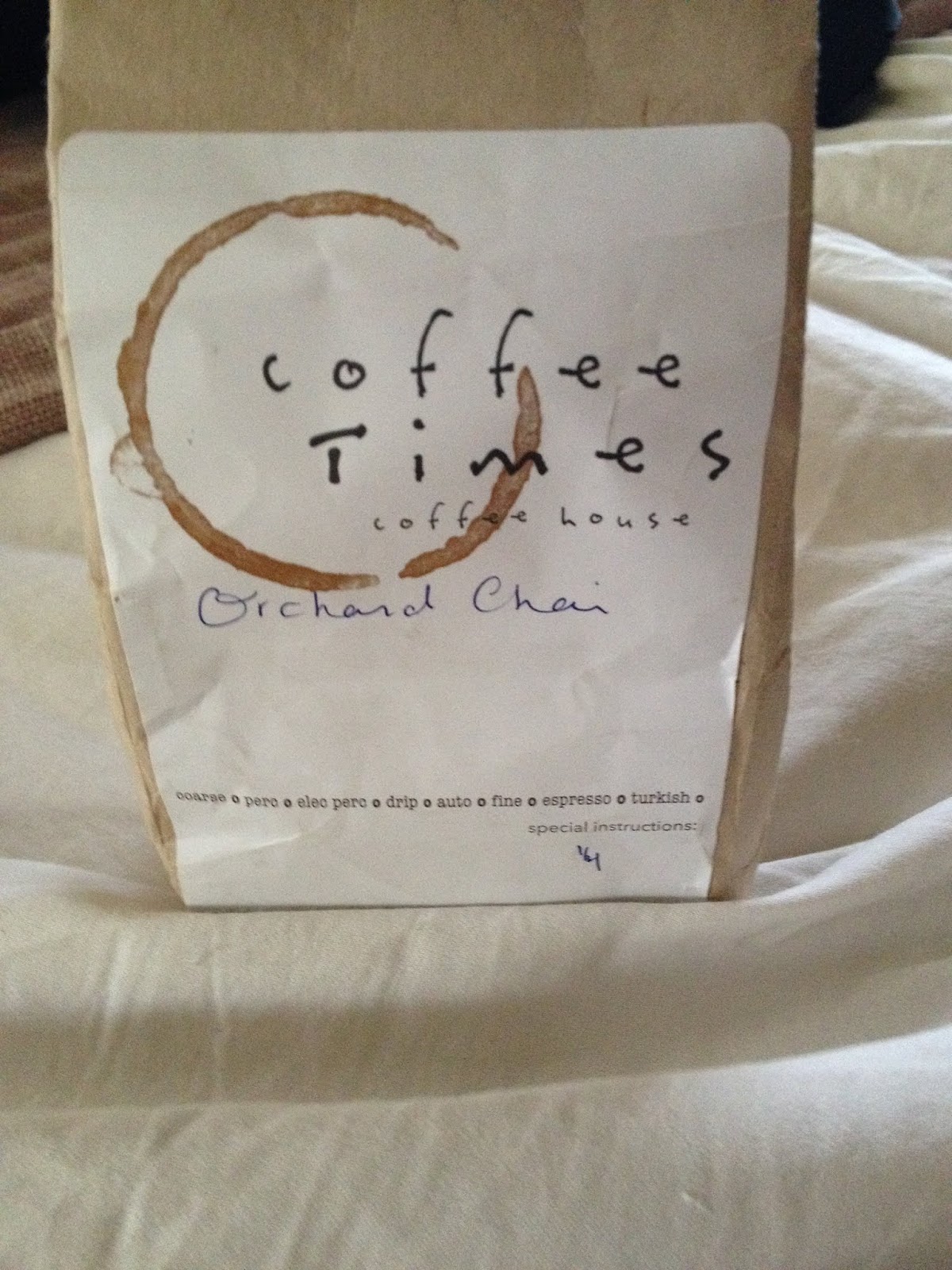
orchard chai.

Each one has a story:
the end of a birthday present from last year,
a gift from my husband’s student
(I made tea from this one day after day
until the whole box was gone),
my daughter’s choice,
a purchase during an outing with an old friend’s new wife.

Each one is filled with ingredients
carefully gathered from trees and bushes and fields,
dried in the sun in other latitudes,
combined and packed in boxes and bags.

Bring in the jar
when the mixture is dark enough:
golden brown, red, peachy.
Take out the leaves or the bags,
sweeten the tea to taste,
and put the jar in the fridge
to chill for a couple of hours.

Serve over ice.

Ruth, from thereisnosuchthingasagodforsakentown.blogspot.com


You can read other people's reflections on this topic at Margaret's blog here.

Saturday, June 02, 2018

What I Learned in May

I don't think people learn much in May, at least not the school kind of learning. May is mostly disrupted schedules, noisy celebrations, chaos of many varieties. There were projects and exams, yes, but mostly, if you haven't learned it by now, you probably won't, not this year.

At the beginning of the month, I wrote down on my "What I Learned" list that I had reread the shipwreck book.

Jonathan Martin writes, "The bad news is that this shipwreck feels like death, because you really may be dying. The bad news is that old and familiar things you loved and that made you what you were are slowly passing away. The good news is you're being born, and the drowning makes possible the moment when all things become new - most of all, you.

Maybe a preacher on the radio told you once you could be born again if you just repeated a prayer after him. How I wish this were so. But the Scripture where a man named Nicodemus comes under cloak of night for a secret rendezvous with Jesus, and the prophet speaks to him about being born again, is also the place where Jesus talks about that Spirit, the one who broods over the sea, bringing life and beauty out of chaos.  The Spirit is like the wind, he says; you don't know where it comes from - and you don't know where it is going. And the people who say yes to this undomesticated Spirit, the people who say yes to the wind - yes to the sea - will be like this Spirit, not knowing where they came from, or where they are going. They are people who learn to trust the wind instead of fighting it, people who learn to navigate the chaos rather than eliminate it. They will be people born of Spirit, people born of the violence of the storm and the wildness of the wind. And because the Spirit who enters them is the Spirit of life itself, they will live forever.

You can't descend back into the waters of your mother's womb, the prophet tells Nicodemus. But you can be born again; you can be made new. It's just that when you do, it won't be because you made 'a decision for Jesus,' because you prayed the magic prayer. If you wish to become someone and something else entirely than the you that was before the storm came...you will have to peer into the sea that threatens to swallow you whole, dive into the mouth of it - and trust. You will have to let God happen to you, which requires letting life happen to you, all the way down. You cannot continue to flail your arms, beat against the sea, and damn the waves. You have to let yourself go all the way under - into the depths of God, into the depths of your own soul, into the depths, of life itself."

So yeah, that.  I keep learning that.

Even though nobody was learning much, I did get observed teaching by an administrator on May 15th. Why didn't he come see me teaching when I was dispensing wisdom back in October? But no, he wanted to see my weary May attempts.

Today we have Graduation and say goodbye to our Seniors, and then the late May early June goodbyes accelerate as colleagues who are leaving pack up and actually leave, finishing the agonizing process they started months ago. This year especially, I am losing some people who have become extremely important to me.

So I keep learning that, too.

Here's what I learned in JanuaryFebruaryMarchApril.  

Friday, June 01, 2018

Poetry Friday: Paul Simon

This was my last week of school with kids, though I may end up back there quite a bit this summer, getting ready for next year and doing summer library. While I've been grading exams and working in my room, I've been listening to lots of Paul Simon, who wrote some of the best songs for cleanup.  He's my choice these days, too, because he's on his farewell tour. I'd always hoped to hear him live sometime, and it's looking now as though it's not going to happen.  The show sounds fabulous, but it's too far away from me, so instead I've been listening to the albums I own, and even finding some songs on YouTube that I hadn't heard before.


In this video, as part of an interview with Wynton Marsalis, Paul Simon says this about writing. Marsalis asks him how he could have written "The Sound of Silence" as such a young man.  He admits that after he wrote it he thought it was better than what he usually did, and then adds:

“I had no concept at all about what is magical about inspiration, you know, and I don’t think about inspiration at all, I don’t believe that you need inspiration, I don’t say I’m going to wait around until some inspiration comes, no, if I’m going to write I have to go to my writing space, and, you know, start to write.”

Later he says that when he was younger, if he liked a song, it was generally a hit.  That's not the case any more, but he's past that point now (and I'm sure it doesn't hurt that there's no longer any pressure to make money).  Instead, he says, “I’m only concentrating on, what can I make, and how can I do this without lying.”

How to choose what Paul Simon songs to love best?  I just can't.  I love it that he has an index on his website of all the songs and the full lyrics (here).  I do appreciate the music, but the lyrics are always the most important aspect for me, and I can't fully enjoy a song until I've figured out what it's saying.

I've posted Questions for the Angels before, and Something So Right, and Insomniac's Lullaby, and others, but the Graceland album is just the best there is, anywhere, ever, and this is one of the best songs on that album:


And here's a bonus:


Now that school is over, I am going to follow Paul Simon's advice and "go to my writing space, and you know, start to write."

This week's roundup is here.

Thursday, May 24, 2018

Poetry Friday: More than Meets the Eye

This week I'm participating in a photo exchange called "More than Meets the Eye," organized by Margaret. She asked people to sign up, and then she matched us up with a partner who lived somewhere else. The instructions were to send a photo from where you lived to the other person, and then to write a poem about the photo you received.

I got a photo from Heidi. As soon as I saw it, I thought of Karla Kuskin's poem "Write About a Radish," which begins "Write about a radish./ Too many people write about the moon."

Here's the photo and my poem:
Radishes

When Margaret told us to send a photo of where we live,
I sent a view of a far-off beach,
and you could see the sky and the ocean and palm trees
stretched out for miles and miles and
this is where I live,
at least after you drive for two hours
and stand on a mountain
and think about being at the end of the road
and how beautiful it’s going to be when you get there

When Heidi sent a photo of where she lives,
it was a close-up of six radishes
freshly pulled from the ground,
and they were cherry-red,
so red that from now on the expression must be radish-red,
and their leaves were fresh and green
and the soil was black and
this is where she lives,
when you get down on your hands and knees
and think about being here where you are
and how beautiful it is right this moment

So I Googled radishes and read about
how they were the first European plant to be introduced to the new world
and how they have 18 chromosomes
and deter aphids
and have 18% of your requirement of Vitamin C
and then I thought here I go again, standing on a mountain,
looking at all the radishes in the world,
instead of at these radishes that Heidi sent me

and so then I put out my hand
and grabbed a radish off of my computer screen
and took a bite out of it
without even washing off the clumps of dirt,
and it was sharp and crunchy
like the essence of salad
and I looked at the the marks my teeth had made in it
and felt its curve with my fingers,
and there were still five more radishes
and I thought what am I waiting for?


Here's Heidi's poem about my photo.

This was so fun, and I think we ought to do it again, sooner rather than later.  As well as creating this challenge, Margaret is also our Poetry Friday host this week, and you can see her roundup here

Friday, May 18, 2018

Poetry Friday: Confession

As I was thinking about the themes in the new anthology Imperfect, which I reviewed last week, I remembered a poem I wrote back in 2011 about confession.  I had fun writing it because of the combination of my French class in high school and words from the General Confession in the Book of Common Prayer.

Even after twenty plus years living here in Haiti, I still often get a sudden jolt of pleasure from the realization that I live in a francophone country and get to speak three languages (English, French, Kreyol) every day.  How amazing is that?  This poem began with one of those moments of realization.


Confession

Today I answered my phone
and briskly told the caller he had the wrong number. 
"Vous vous êtes trompé, Monsieur."
Sir, you made a mistake.

Then I had a flashback to my high school French class,
when we spent a whole period drilling
the verb se tromper,
reflexive, literally meaning
to deceive oneself.

Back then, memorizing lists of francophone countries,
I didn't know I'd live in one of them
and use those phrases I'd learned.

With Miss Murray
we practiced
telling a hapless Gallic Monsieur that he had the
wrong room
wrong number
wrong date
"Excusez-moi, Monsieur.  Vous vous êtes trompé de salle. "
"...de numéro."
"...de date."
"Vous vous êtes trompé, Monsieur."

What a mess that imaginary Monsieur had made of everything!

But it might have been more useful to practice
saying that I,
the first person singular,
had messed up.
Je me suis trompée
I deceived myself.
Translated: I made a mistake.

Through ignorance
through weakness
and through my own deliberate fault.


At sixteen I didn't know
how often I'd have to say
those words in my life,
in whatever language was appropriate.

I have the wrong room
the wrong number
the wrong date.
I have said the wrong thing.
I spoke too soon, or not soon enough,
Or not at all.
I fell short.
I sinned.
I am, quite simply, wrong.

I was mean, I hated,
I was selfish and petty,
I was ungrateful and unkind.
My thoughts, if they appeared on the blackboard
of my high school French class,
would embarrass me.

I have left undone the things that I ought to have done
And I have done those things that I ought not to have done


Oh sir,
mysterious caller,
you do indeed have the wrong number
But little do you know how very minor
is your offense
compared to my own.
Forgive me, oh stranger on the telephone,
For indeed,
Je me suis trompée. 

Ruth, from thereisnosuchthingasagodforsakentown.blogspot.com


This is completely unrelated, but I can't help sharing the ghazal my daughter texted me for Mother's Day.  (She's been in a ghazal mood for a while, as you can see by the one she sent me back in April, and that post has a link to some information on how ghazals work, in case you aren't familiar with them.)  This one is by Aimee Nezhukumatathil.  


I have Poetry Friday off this week to celebrate the Haitian flag.


Today's roundup is here.


Thursday, May 10, 2018

Poetry Friday: Imperfect

There's so much to love in this new anthology for middle schoolers, Imperfect: Poems about Mistakes.  Tabatha Yeatts has collected an appealing mixture of poems old and new (including a few by middle schoolers), interspersed with quotes perfect for inscribing on binders. At a time in your life when mistakes can feel enormous, permanent, impossible to get over (and really, is there any other kind of time in your life?), this book brings a great big dose of perspective.

Brenda Davis Harsham categorizes mistakes as three-alarm, two-alarm or one-alarm in her "Three-Alarm Mistakes," a poem that started me imagining how fun it would be to brainstorm those with my students.   Mistakes do come in all shapes and sizes, and all are represented here, in seventy poems both funny and serious.

Is the mistake being mean to someone, like in "To the boy playing with his army men on the front lawn," by Michelle Heidenrich Barnes? Is the mistake not speaking up when you really had plenty to say, like in Suzy Levinson's "Lots of Things"?  Did a vampire get seriously hurt, like in Heidi Mordhorst's "Vampire Vs. Venti"? Was it a mistake that ended up turning into an invention, like  in "Persistence, or In Praise of Post-It Notes," by Keri Collins Lewis? Mary Lee Hahn writes about the Leaning Tower of Pisa.  Irene Latham takes on the voice of the Titanic.

All of these imperfections lend themselves perfectly to poetry.  In Tabatha Yeatts' introduction, she quotes Kellie Elmore: "Poetry will die when love and pain cease to exist."  Since both love and pain abound in middle school, poetry abounds there too.  As Liz Garton Scanlon asks in her series of haiku entitled "Haiku for How to Screw Up Middle School,"

Will this never end?
Middle school's not forever,
You can do this thing.

I started reading this anthology last weekend on our eighth grade retreat, an annual event when we take our oldest middle schoolers, soon to leave us, off to somewhere beautiful overnight and spend some time introducing them to what awaits them in high school.  (Credits! Time management! Setting goals!)  Middle school certainly isn't forever, we're reminded each year as we pass on another class we've come to love.  They don't go far - just upstairs - but they do go away.  As I told them about GPAs, I tried hard to balance advice to take academics seriously right from the first day of ninth grade with the comforting fact that all is not lost - life is not over - if you get a D.  Poetry like this helps as we try to share our experience (compared to a map in Carl Sandburg's poem "Experience") while still recognizing that the way is theirs to choose.  It will be an imperfect way, but they are going to be fine.

Yes, there's a lot to love in this book, and one thing I must mention is the beautiful cover.  It depicts the Japanese art of kintsugi, mending cracks using gold. Instead of trying to hide mistakes or broken places, we can look at imperfections as part of our history, something to be honored as contributing to who we are now. What better metaphor for growth, in middle school and beyond?

Here are some other people's takes on this anthology.

Jama has this week's roundup.

Thursday, May 03, 2018

Poetry Friday: Mail Day

Where I live, in Haiti, we subscribe to a service that delivers our mail once a week on an airplane. This used to be a much bigger deal when we first moved here, when many more things were done by mail. Now, we do bill-paying and correspondence online, so we don't await mail day as eagerly as we used to. 

But I've been waiting for some mail for a little while, and today I got two poetry-related packages.

I'm leaving tomorrow to go on the Eighth Grade Retreat and I'm trying to get next week's lesson plans ready (the sub plans for tomorrow are already done and laid out on the desk), and I can't wait until I get home to do my Poetry Friday post for tomorrow because our internet is out at home.  I was tempted to just skip Poetry Friday this week, but I really wanted to show you what I got in the mail. 

So here it is:
A random number generator chose me to win this book when I left a comment on JoAnn Early Macken's blog.  I'm looking forward to reading it!

And then there's this anthology. And I'm in it! And I'll post a review next week when I've had a chance to read it!
So that's my Poetry Friday post for this week.  But I'm sure other people have written posts with actual poetry in them, and you can find those here, at Brenda Davis Harsham's blog

Spiritual Journey First Thursday: Special Days

I've recently started blogging with a group writing about spiritual themes on the first Thursday of each month.This month our host Violet has invited us to reflect on special days.

I grew up with a bit of a weird combination of low-church evangelicalism and high-church Anglicanism. Throw three different countries into the mix (each with its own holidays), plus more after I grew up, and you'll understand that my experiences of special days in spirituality is a bit of a mixed bag. A few years ago, I posted this piece about how Haitian Mother's Day was treated as a bigger deal in the "aggressively Protestant" church we were then attending than just about any other day of the year, with the possible exceptions of Christmas and Easter. It still makes me smile to remember all the men in the congregation obediently kissing each woman in the room on both cheeks during the service at the leader's request.

I have grown to appreciate the church year much more, as a way of reviewing the whole story of Christ's life each year, rather than just as a wonderful source of days off from school. We start at the beginning of December with Advent, preparing again for Jesus' birth. The other day we had the word "advent" as a vocabulary word in class, both with a lower case a and an upper case one, and one of my students, who is the son of a pastor, told me that he was pretty sure that Advent wasn't a Christian concept, as the vocabulary book claimed, because he had never heard of it before. I found it hard to imagine that he had grown up in the Christian church and attended a Christian school for most of his life, and never heard of Advent. Wreaths? Candles? Advent calendars? I probed, but none of these things rang a bell. To me, though, Advent is especially important because of the terribly busy time surrounding it. I love taking the time to reflect and prepare.

Then it's Christmas, then Epiphany (celebrating the Wise Men visiting the baby Jesus), then Lent, culminating in Holy Week and then Easter.  Next comes Pentecost, or the birthday of the church, and then "The Season after Pentecost" (as my Book of Common Prayer calls it) or "Ordinary Time," as I understand it's often referred to in the Catholic church. That lasts until Advent starts again.  In between there are, of course, special church holidays here and there.  Living in a largely Catholic country, I even get days off for some of them, like Ascension Day, this month.

But then there are the special days that have nothing to do with the church. I have a natural tendency to value anniversaries, made more intense (worse?) by the "On This Day" feature on Facebook, which reminds me of some I would have otherwise forgotten. As the years go by, each day has more and more memories attached to it, both positive and negative. There are days which are important to many, like January 12th, when goudou-goudou struck Haiti.  (Here's a poem I wrote about that one on the 22-month anniversary.) There are days which matter only to our family, like family birthdays. Then there are more private ones, like the day my husband first kissed me.  (He and I talk about that day every year.) Some I hardly even mention to anyone else; I just honor them in my heart. There's the beginning of an important friendship; the day I had a memorable conversation; the day a job was lost; the day a tiny baby was lost: a child known to nobody, a child who had never yet seen the light. That last one is on a day that is special for another reason, a happy one, so I let the happy reason be the important one, and just keep the sorrow to myself.

I said these days had nothing to do with the church, and of course that's true, in the conventional sense. Nobody's going to have a service. But those days matter in my spiritual growth, too. Those are milestones in my life which I look back on, times when God was present with me through joy and sadness. They may be Ordinary Time to everyone else, but to me those days matter, even if commemorated only with a fuzzy photo of my verse-a-day calendar, or a quiet conversation, or a few tears in my shower in the morning.
"My times are in your hands," says Psalm 31, and so I have to believe those days matter to God, too.  On some of them He felt very close, and on others very far away, but He was always there.  And M.S. Merwin reminds me that there's another day coming, an anniversary that passes each year without my knowing it: the anniversary of my death.

For the Anniversary of my Death
by M.S. Merwin

Every year without knowing it I have passed the day
When the last fires will wave to me
And the silence will set out
Tireless traveler
Like the beam of a lightless star

Here's the rest of the poem.

That day, when it comes, will be remembered by a few people, for a while, and then forgotten. As people continue to celebrate the special days of the church year, my personal special days will fade, and people of the future will have other reasons to celebrate and other reasons to be sad.

And in the meantime, "my times are in your hands," the Psalmist prayed, and I pray.  Each day is another chance to grow, to learn, to serve, to worship.  Each day is a special day.

Head over to Violet's place to see other people's reflections on this topic.

Tuesday, May 01, 2018

What I Learned in April

Once again (just like in January, February, and March),  I ended the month with a very short list of what I learned.

I started the month by discovering a series on YouTube about the history of fashion. In each episode, Amber Butchart examines a famous painting or other piece of art (in the one below, it's the effigy on a tombstone), focusing on what someone is wearing. Then some amazing tailors recreate the outfit and Amber puts it on. This is fascinating stuff.

April was National Poetry Month, a time always filled with loads and loads of poetic activities, way more than I have time to participate in or even follow at a distance. Like other members of the poetic community (which sounds like it would be a fun place to live), I console myself with the knowledge that I "do poetry" all year long.

One thing I do participate in is the annual Progressive Poem. This year's ended at Dori's blog yesterday, and at that link (plus in earlier posts right here on my blog) you can see a list of all the contributors. This year our protagonist was a seed. Here you can also read all the previous Progressive Poems since the beginning in 2012.  I've written a line in all of them!

Another poetry-related happening this month was that an anthology came out with a poem in it by me. I will write more about this anthology when I receive my copy, which I'm hoping will be very soon. So far I have read other people's reviews and reflections but not held the book in my own hands. You can order a copy here

My writing is going to be appearing soon in another book, this one an e-book coming out in three weeks. You can pre-order it now here.  Rachel Pieh Jones, otherwise known as Djibouti Jones, collected these essays that were part of a series about TCKs on her blog a few years ago, updating them with interviews with the authors and some other additional content. This one I have held in my hand (well, I've downloaded it to my Kindle from the copy Rachel sent me), and I'm enjoying reading it (I'll post a review when I get done). It's coming out just in time for graduation and the annual migration of the TCKs (the American ones, anyway) away from their overseas homes to college in the US.


I ended the month in an appropriately poetic fashion by listening to a podcast of Krista Tippett's interview with Michael Longley on her radio show On Being. He talks about his writing, living in Northern Island, the "Troubles" (and the reason he hates that term), and his belief that going back to the same beautiful place again and again can be even better for your writing than traveling to lots of new places. Some of these topics may be in the unedited version of the podcast, because after I listened to the produced radio version, I went back to listen to that. The On Being podcast always comes out in both versions, and while I very rarely listen to the longer one, every once in a while there's a conversation that seems worth it. This was one.

This month I started something else that's new to me. While I don't dye my gray hair, I have started feeling self-conscious about how my writing shows my age. I'm speaking specifically of the way I learned many - ahem - years ago to type two spaces after each period. I learned to type on a manual typewriter, one of the last classes to do so in my high school before computers were introduced, and I keep seeing and hearing in more and more sources that it's just not the done thing any more. Even my daughter complained, saying that it was the thing I do that irritates her the most. So I'm working on fixing that. I often type a whole page and then realize I have gone back to my old habit, but I'm trying to form a new habit. It's good for the brain to form new habits, right? Especially at - ahem - my age.


Sunday, April 29, 2018

Links about Loss

So I was going through the endless windows I have open on my desktop, trying to see if I can close any of them or whether they all have to stay open in case I might someday need to read them again, and I found these two links that seem oddly related to one another.  I wonder if I have some kind of issues about loss, and that's what prevents me from closing links casually, just assuming I'll be able to find them again?  I guess that's worth looking into, but in the meantime, here are two beautiful essays to read.

Map of a Small Loss
by Hillery Stone

"When you lose something you want desperately to find, you begin to see it everywhere, just before you actually turn to look.  These visions are an attempt, both impossible and compulsive, to will the lost back into being.

When I was young I liked a dark story, pulled from Mexican folklore, about a brave rabbit who sees a starving Aztec god and offers herself -- her own breathing body -- to save his life.  The tale came back to me when I was combing our block for the matted-down figure of my two-year-old's beloved stuffed bunny, who had vanished on a walk to the grocery store.  What dark exchange had transpired when my back was turned?  My mind was taking measurements across an intricate field of vision, assessing how far an inanimate object could conceivably go from its drop-point in thirty minutes. How was this bunny suddenly nowhere?

and the other one:

A Map of Lost Things
by Jamila Osman

"Nobody leaves home thinking they will never return.  I wonder what my parents would have taken with them when they left their home in Somalia in the late '80s.  Who might they have made amends with, what old haunts would they visit one last time if they knew they would never be back?"

Saturday, April 28, 2018

Reading Update

Book #33 of 2018 was another Beatriz Williams book, which I picked up after enjoying A Hundred Summers, reviewed here. But I didn't like this one, Cocoa Beach, nearly as much, and then I started another Williams title which I didn't even finish.

Book #34 was The Great Divorce, by C.S. Lewis. I dug out this book to quote it in this post and then realized it had been many years since I had read it last. It must have been before I started keeping track of my reading on this blog about eleven years ago. Time to read it again. Now I want to go back and reread all the Lewis books; there's just nobody like him. This one is a classic and highly recommended.

Book #35 was The Peach Keeper, by Sarah Addison Allen. Very rom-com, but a quick, fun read.

Book #36 was The Space Between Words, by Michèle Phoenix. This one was well-written and entertaining, with its surprising plot going from the Bataclan attack in Paris in 2015 to the persecution of the Huguenots in the seventeenth century. I say surprising because the depth and intensity of the story were beyond what I had seen coming. Recommended!

Book #37 was I Am, I Am, I Am: Seventeen Brushes with Death, by Maggie O'Farrell. The conceit for this memoir is revisiting all of the author's near-death experiences. Although they aren't told chronologically, these vignettes do work together to give us an unforgettable portrait of O'Farrell, and in the process, a reminder of how fragile and precious we humans are.

Book #38 was A Wrinkle in Time, by Madeleine L'Engle. I read this with my seventh graders, an experiment I don't think I'll repeat next year. The scenes I remembered from my first reading of this novel when I was about ten years old were every bit as exciting to me, but I had forgotten how talky this book is and how little actually happens. Most of the kids didn't really get it, but they liked the movie preview I showed, and begged to watch the movie next year in eighth grade when it's available. And I had forgotten that L'Engle used the image of a sonnet to illustrate human freedom - I love that.

Book #39 was Odysseus in the Serpent Maze, by Jane Yolen and Robert J. Harris. This was loads of fun, and I wish I had been able to read it the same year I first read A Wrinkle in Time, because I think I would have enjoyed it even more back then. Who could resist reading about the adventures of Odysseus, Penelope, Mentor, and even Helen of Troy as teenagers?


Thursday, April 26, 2018

Poetry Friday: The Poems in my Pocket, by Amit, Emily, and Me

I'm writing this on Thursday night, at the end of Poem in your Pocket Day.  This morning my daughter sent me a quirky, funny ghazal called "By Accident," by Amit Majmudar (my daughter had recently heard him speak), and that was my poem for the day.  It's from his book 0°, 0°, and it contains the following words:

First she gave me the wound by accident.
Then the tourniquet she tied unwound by accident.

Your friend may want to start running.
I gave his scent to the hounds by accident.

...

Only surfaces interest me.
What depths I sound I sound by accident.

What should we look for in a ghazal, Amit?
Inevitabilities found by accident.

You can observe some of the rules of a ghazal in this excerpt, if you aren't familiar with them, and here's a link giving a little more explanation and a few more examples.

I was happy to have a poem in my pocket, and then later in the day, I saw a Facebook post by the Academy of American Poets suggesting this Emily Dickinson poem as one to keep in one's pocket.  This one was definitely an inevitability found by accident, just as Amit suggested.

It's All I Have to Bring Today

It’s all I have to bring today—
This, and my heart beside—
This, and my heart, and all the fields—
And all the meadows wide—
Be sure you count—should I forget
Some one the sum could tell—
This, and my heart, and all the Bees
Which in the Clover dwell.

Emily Dickinson


Isn't it a little annoying that we always have to take our hearts with us wherever we go?  In the Bible it talks about God replacing our heart of stone with a heart of flesh, and I often think that a heart of stone would be a lot easier to deal with.  It might not pump blood very efficiently (and that is, after all, one of the main uses of a heart), but it would hurt less than the flesh variety.   I lug it all with me: fields, meadows, bees, and that pesky heart, always slowing me down.

Here's my response to Emily, and maybe I'll stick this one in my pocket for tomorrow, commonly known as Day After Poem in your Pocket Day.

It's all I have to bring today --
My pesky heart of flesh --
Bandaged and bruised from all its wounds --
And often hurt afresh --
As armloads of clover make me sneeze --
My heart continues strong --
My bee-stung, sunburned, sturdy heart --
For it's survived this long --

Ruth, from thereisnosuchthingasagodforsakentown.blogspot.com


The incomparable Irene has today's roundup.  I've been loving her NPM project this year; take a look at her poems inspired by art from the Harlem Renaissance.  

Monday, April 23, 2018

Happy Blog Birthday to Me!

Today I've been blogging here at this site for twelve years. And also, if William Shakespeare were still alive, he would be 454 years old.

Shakespeare was pretty confident that people would be reading his words forever. I am less so about mine, but I do love having a little corner of the internet where I can post about what I'm reading and writing and teaching. Thank you for stopping by to read and for leaving encouraging comments on my posts!  I'd enjoy sharing some birthday cake with you, but instead, here's a festive photo taken recently on my street. 

Friday, April 20, 2018

Poetry Friday: A Madeleine and an Anthology

I've been reading madeleine poems with my eighth graders. There's a chapter in Nancie Atwell's book Naming the World of these poems. I'm not sure if Nancie was the first one to name a genre after the moment in Proust's novel À la recherche du temps perdu when a character eats a cookie called a madeleine, and suddenly the smell and taste of it brings on a flashback to his childhood that consumes the rest of the book.  We read the ones that she has in her book, plus a couple of others I've collected, and then I decided to write one with the kids.

What memory should I choose? I decided to go with food and drink, and the most obvious example was an experience I had at seventeen or so when I was helping with a class field trip at the school I used to attend in Kenya. We went to the part of the country where I had lived as a young child, and I was served a drink I hadn't had in a long time.

I decided to use a poem I'd read with the kids by George Bilgere as a mentor text for my poem. His poem is actually called "A Madeleine." It starts like this:

For me, it's a bit of cool hide
from an orange, a continent
torn from a pulpy planet,
held to the light and squeezed
until its cratered field
bursts with little geysers,
citrine explosions. 

Here's the rest of the poem. 

I think this is an absolutely masterful poem.  Notice how Bilgere describes the orange itself in the first stanza and then life growing up on an orange grove in the second, and how the first makes him remember the second.  The "continent torn from a pulpy planet," the "little geysers" of juice coming out of the peel, and then the end, where he compares his family to an orange that hasn't been peeled yet: just amazing.

I decided to borrow his first two words and then the first two lines of the second stanza, so I gave the kids this template:

For me, it's...

Fill in the blank.  Maybe it's a food or drink (start there).  Or maybe it's your grandmother's perfume, or a stuffed animal that you still cuddle for comfort even though you're afraid maybe you're too old.  What is it that brings back memories of your very early childhood?

The two lines from the second stanza are:

Hold it to my nose
and I go Proustian;

I told them they could change that to "hold it to my ear" or "show it to me" or whatever works for the object they are discussing.  

I decided to write about morsik.  I told the kids about it in class and they wanted to see pictures, so I googled it, and didn't find much until I changed the spelling to mursik, which is apparently the official way to write it.  And then...well, the internet came through for me, as it always does.  Photos, a video including someone making it and claiming that it's the secret to the athletic skill of Kenya's world-famous distance runners, articles about people lamenting that it's now available in plastic containers (I had no idea!).  You have to understand that I haven't lived in Kenya since I left for college, and apparently time has continued to move on, in that way it does.

So here's what mursik is.  I should warn you that in the following video, some people speak without interpretation in languages you probably aren't going to know (unless you are from Kenya, in which case, karibu and can I pour you a cup of chai?), but the main narration is in English and you will see the whole process of making mursik.  And here's a really interesting article from the Kenyan newspaper The Standard.


Basically, mursik is milk mixed with soot from a burned stick (and apparently it matters what kind of tree the stick comes from, which I didn't know), and left to sour for three to five days until it has a yoghurt-like consistency. The Masaii add cow blood to theirs, but I've never drunk it that way. The kids were suitably horrified and my minilesson was launched.

I put my template up on the screen and made a bunch of notes, telling the kids I would work on the poem and show them my completed draft later. Then I encouraged them to write their own madeleine poems, and many started them. I've only read one so far - about a Barbie doll - and I loved it.  I can't wait to read the others when I get the drafts.

So here's my completed first draft, which falls very far short of Bilgere but which I like because it's the first time I've written about this experience.

A Madeleine
after George Bilgere

For me, it's mursik
poured from a gourd into a tin cup.
First they burned the end of a stick, 
and then scraped it in the gourd,
coating the inside with soot.  
Then they filled the gourd with milk
and put it aside to rest for a few days.
Now it's thick and clumpy, 
with a delicate flavor of yogurt mixed with charcoal.

Hold it to my nose
and I go Proustian
when, years after my last taste of it,
someone offers me a drink
on a back porch in Kericho District in Kenya.
As soon as I smell it,
and then taste it,
I'm a little blond, blue-eyed girl again,
begging for mursik from my parents' students.
The sharp tang brings back a time
when I took what I was given
and didn't ask where it came from
or whether there would be more,
a time when I knew who I was
and where I came from  
and it hadn't yet occurred to me that any of those
were complicated questions.

Ruth, from thereisnosuchthingasagodforsakentown.blogspot.com


Tabatha has today's roundup, and news: today's the release day for the new anthology she's editing, Imperfect: Poems About Mistakes, an Anthology for Middle Schoolers. And I have a poem in it! This is my first time being in an anthology and I'm pretty excited.  You can order your copy here.  And stop in at Tabatha's Imperfect Fête, too!  As she points out, "Considering we can't help making mistakes, we have to learn how to deal with them. How to make amends, how to forgive, how to laugh about it, how to move on." That's a good lesson to learn in middle school, or at any other time in life.

Tuesday, April 17, 2018

Line 17 - Why, That's My Line!

Before this month's Progressive Poem even began, Heidi gave us an assignment. She asked us to write down our thoughts about the first line, and our predictions for how the poem would go. I have to confess that I didn't write anything down, but I did think about the line, and silently appreciated the fact that our protagonist was a seed. Lately I've been thinking this phrase often, a phrase relevant to more areas of my life than you might expect: Seeds, not switches. I don't know who created this phrase originally but the first person I heard use it was Rob Bell. He was talking about how many processes are slow, organic, unpredictable, not started by flipping a switch but by planting a seed. I've thought about how often, in my teaching, for example, I want results and I want them right now. I'm in a hurry, not wanting to let things take their course. That's what I thought about the line: Let's see what happens. Let's let this little seed grow as it wants to.

And wow, it's really grown!

I started writing my line the way I start a lot of my writing: by looking at pictures. But let me back up a little.

When I woke up on Monday morning, one of the first things I did was upload four photos to Facebook. I've been doing a Photo a Day project; this is the second year that I am posting daily photos responding to prompts I find here. Today's prompt was "Striking." On Sunday I took some photos of a plant I found especially striking. Here are a couple of the photos I shared:
Right after I posted the photos, I clicked on Monday's line of the poem and read it. I thought about it, enjoyed it, reread it, thought some more. I loved the "trellis...made of braided wind and song." Isn't that beautiful?

But I needed some pictures in my head to get me started. I started Googling images. I started with a trellis, and then jasmine. And that second search term brought me a whole bunch of pictures that looked exactly like my striking plant, except they were white. Wait, I thought, is that plant actually jasmine? That would be just too magical to be true.  Or maybe too creepy to be true, with Google spying on what I just posted on Facebook.  Hmmm.....

I typed in "purple jasmine" and found a lot of pictures of a Disney princess in a purple dress, and then some flowers that are purple and in the jasmine family. I don't think my plant is jasmine, but it sure does look a lot like it. I think it's purple wreathIs purple wreath related to jasmine? I inquired earnestly of Google, and again, I don't think it is, but there is such a thing as purple jasmine, I learned, and another name for that is star jasmine.

I wanted so much to write about flowers in my line, but I couldn't. It isn't time yet. The star-shaped flowers hanging out with the wily Moon can't grow until there's a place for them to live. You can't rush seeds.  Seeds, not switches.

I wanted to continue the song that Sarah Grace started. After all, we are at a party. I watched some YouTube videos showing time-lapse photography of plants growing, and finally, after thinking about it all day, I wrote my line, all seven words of it. I hope you like it. I especially hope Christie likes it, since she has to add tomorrow's line.

So here it is, the Progressive Poem, with my line added at the end in bold:

Nestled in her cozy bed, a seed stretched.

Oh, what wonderful dreams she had!

Blooming in midnight moonlight, dancing with

the pulse of a thousand stars, sweet Jasmine

invented a game.


"Moon?" she called across warm honeyed air.

"I'm sad you're alone, come join Owl and me.   

We're feasting on stardrops, we'll share them with you."  

"Come find me,” Moon called, hiding behind a cloud.


Secure in talons' embrace, Jasmine rose

and set. She split, twining up Owl's toes, pale  

moonbeams sliding in between, Whoosh, Jasmine goes.

Owl flew Jasmine between clouds and moon to Lee's party!


Moon, that wily bright balloon, was NOT alone.
                                                    
                                                      Jas grinned,
                                                       stretched,
                                                         reached,
                                                            wrapped
                                                               a new
                                    around            tender
                                                rootlet
a trellis Sky held out to her, made of braided wind and song.
Her green melody line twisted and clung.


Keep following the journey of the Progressive Poem by clicking on the blogs in the list below.  I wonder what will happen?


April
2 Jane at Raincity Librarian
4 Michelle at Today's Little Ditty
5 Jan at bookseedstudio
6 Irene at Live Your Poem
7 Linda at TeacherDance
8 Janet F. at Live Your Poem
11 Brenda at Friendly Fairy Tales
12 Carol at Beyond LiteracyLink
13 Linda at A Word Edgewise
15 Donna at Mainely Write
16 Sarah at Sarah Grace Tuttle
18 Christie at Wondering and Wandering
19 Michelle at Michelle Kogan
20 Linda at Write Time
23 Amy at The Poem Farm
24 Mary Lee at A Year of Reading
26 Renee at No Water River
27 Buffy at Buffy's Blog
28 Kat at Kat's Whiskers
29 April at Teaching Authors
30 Doraine at Dori Reads

Friday, April 13, 2018

Poetry Friday: Happy Birthday, Lee Bennett Hopkins!

We're celebrating Lee Bennett Hopkins' birthday today on Poetry Friday.  As soon as I found out, I went looking for his books on my shelves.  The first thing I found was Author Talk: Conversations with Judy Blume, Bruce Brooks, Karen Cushman, Russell Freedman, Lee Bennett Hopkins, James Howe, Johanna Hurwitz, E. L. Konigsburg, Lois Lowry, Ann M. Martin, Nicholasa Mohr, Gary Paulsen, Jon Scieszka, Seymour Simon, and Laurence Yep.  (Whew!  That's quite a subtitle!)

I loved reading the conversation with LBH.  He tells about his childhood, and how he hated school and didn't do well until eighth grade, when a teacher influenced him with the "gift of hope."  He wasn't interested in poetry until he started teaching.  There's even a series of photos of three stages in the life of a poem, from the few lines of the idea to the revision-in-progress to the published piece.  Here's his description of his "typical workday:" "I don't have a routine.  I write whenever I feel like it.  It's back to childhood: no rules!  Even so, I'm very disciplined.  I'm always working on several books at a time.  I always have a lot of projects going."

Thank you for all the many projects you have brought to completion through the years!  Your work has been a gift to students and teachers everywhere.  Happy birthday!

I've been enjoying the extra poetry in my inbox that April always brings, even though, as usual, the many goings-on around the internet are too much for me, and I can't possibly keep track of everything I'd like to and still keep track of my life and my students.  Poetry, reading it and writing it,  is a year-round preoccupation of mine, and one thing I enjoy is the Poetry app put out by the Poetry Foundation.  (You can download it here.)  It lets you search for poems by author, first line, poet, and even mood.  And you can make a favorites list.

Here's a poem from my favorites list for this second Poetry Friday in April:

There is No Word
Tony Hoagland

There isn’t a word for walking out of the grocery store
with a gallon jug of milk in a plastic sack
that should have been bagged in double layers

—so that before you are even out the door
you feel the weight of the jug dragging
the bag down, stretching the thin

plastic handles longer and longer
and you know it’s only a matter of time until
bottom suddenly splits.

There is no single, unimpeachable word
for that vague sensation of something
moving away from you

as it exceeds its elastic capacity


Read on to find out why Tony Hoagland would find such a word useful here.

As always, I've been enjoying the Progressive Poem, too.  Below you can find the list, and links to the sites of everyone participating.  My line is coming up on Tuesday.


April
2 Jane at Raincity Librarian
4 Michelle at Today's Little Ditty
5 Jan at bookseedstudio
6 Irene at Live Your Poem
7 Linda at TeacherDance
8 Janet F. at Live Your Poem
11 Brenda at Friendly Fairy Tales
12 Carol at Beyond LiteracyLink
13 Linda at A Word Edgewise
15 Donna at Mainely Write
16 Sarah at Sarah Grace Tuttle
18 Christie at Wondering and Wandering
19 Michelle at Michelle Kogan
20 Linda at Write Time
23 Amy at The Poem Farm
24 Mary Lee at A Year of Reading
26 Renee at No Water River
27 Buffy at Buffy's Blog
28 Kat at Kat's Whiskers
29 April at Teaching Authors
30 Doraine at Dori Reads

Here's to all the things poetry celebrates, and here's to the way poetry puts words to things for which there are no words.  Happy Birthday, LBH, and Happy Poetry Friday, everybody!  You can see more tributes and more poems here at today's roundup.

Friday, April 06, 2018

Poetry Friday: Late Due to Tomatoes

This is just to say
that I'm sorry I was late
to my meeting this morning
except not that sorry.
I stopped to take some pictures
of the tomatoes in my yard.
They were so beautiful.
So small and green
and so flecked with
rainwater.
And the meeting
seemed so far away.

Ruth, at thereisnosuchthingasagodforsakentown.blogspot.com

That happened yesterday morning.  I was only slightly late to my meeting - maybe a minute.  And it wasn't an official school meeting, just a get-together with a couple of friends to pray before school on Thursdays.  And look at my tomatoes:

On my way to that meeting, I was thinking wildly sentimental thoughts about why this was National Poetry Month and how growing things were like poems and how my tomatoes made me a lot happier than meetings.  And all of that thinking led me to a more realistic poem about the effects of poetry on one's professional life, "To a Frustrated Poet." It begins like this:

To a Frustrated Poet
by R. J. Ellmann

This is to say
I know
You wish you were in the woods,
Living the poet life,
Not here at a formica topped table
In a meeting about perceived inequalities in the benefits and allowances offered to employees of this college.
And I too wish you were in the woods,
Because it's no fun having a frustrated poet
In the Dept. of Human Resources, believe me.

I posted it here, but if you follow the link in that post to find the end of the poem, you'll reach a dead end with a statement from Minnesota Public Radio (grrrrr, talk about a Frustrated Poet - that's what I become every time I follow a link to the old Writer's Almanac).  So I found this link instead.

I have been enjoying all the extra poetry around this time of year, including the Progressive Poem.  Here's a list of the places you can go to keep up with that:


April
2 Jane at Raincity Librarian
4 Michelle at Today's Little Ditty
5 Jan at bookseedstudio
6 Irene at Live Your Poem
7 Linda at TeacherDance
8 Janet F. at Live Your Poem
11 Brenda at Friendly Fairy Tales
12 Carol at Beyond LiteracyLink
13 Linda at A Word Edgewise
15 Donna at Mainely Write
16 Sarah at Sarah Grace Tuttle
18 Christie at Wondering and Wandering
19 Michelle at Michelle Kogan
20 Linda at Write Time
23 Amy at The Poem Farm
24 Mary Lee at A Year of Reading
26 Renee at No Water River
27 Buffy at Buffy's Blog
28 Kat at Kat's Whiskers
29 April at Teaching Authors